
How often do you click over to a business’s Instagram profile, find something you like, and then tap the link in their bio to learn more?
Probably pretty often.
More often than not, that link takes you to a third-party page filled with buttons: website, services, booking, latest offer, maybe a blog post or two. It works, and there’s absolutely nothing wrong with using a platform like Linktree or another link-in-bio tool if it’s the right fit for your business.
But if you’ve spent time building a thoughtful website, developing a cohesive visual identity, and making sure your brand feels consistent from one touchpoint to the next, it’s worth asking a bigger question:
Could your link in bio be doing more for your brand?
That’s exactly what we had in mind when we created a new links page for The Cottage Collection. Rather than sending visitors to another platform, we built the page on the brand’s website, creating a polished, on-brand place for social media visitors to go next.
The best link in bio isn’t necessarily the one with the most links; it’s the one that makes the next step feel easy.

From social media discovery to the next click, a link in bio should make it easy for your audience to keep exploring your brand.
So, What Is a Link in Bio Page?
At its simplest, a link in bio page gives your social media audience one central place to find the information you most want them to see.
That might mean links to your:
Services
Products
Booking page
Current offers
Events
Blog
Newsletter
Contact form
Seasonal promotions
You can create that page using a third-party platform, or you can build one directly into your existing website.
Neither option is automatically right or wrong. Instead, what matters is the experience you're creating:
Is it easy to use?
Does it feel like your brand?
Can you update it when your business changes?
Perhaps most importantly, does it help your audience find what they came for?
Those are the questions worth asking before simply adding another button to the list.
Why Your Own Website Might Be the Best Link in Bio
There are a few reasons we like the idea of bringing this experience back to your own website.
It Keeps the Experience On Brand
A third-party link page can sometimes feel like a separate digital experience from the rest of your business. Your Instagram looks one way, your website looks another, and then your link in bio takes visitors somewhere completely different.
When you build the page on your own website, you can carry the brand through every part of the experience:
Typography
Brand colors
Photography
Voice
Design style
Overall user experience
For someone looking for a place to stay on an upcoming vacation, they discover the property on Instagram, like The Cottage Collection, click the link in the bio, and continue into the website without feeling like they've left the brand behind.
Your link in bio should feel like an extension of your brand, not a random detour.
It Keeps Visitors in Your Digital Home
There’s also something to be said for keeping people on your website once you’ve earned the click.
For a hospitality brand, the journey might look something like: Instagram, branded links page, explore the property, check availability, and then book.
For an interior designer, it could be: Instagram, branded links page, services, portfolio, and then contact.
Instead of sending visitors off to a handful of disconnected destinations, your website becomes the central hub for the experience, and that matters.
Once someone is on your website, they can discover more about your business, explore your work, read your story, and get a better sense of what it would be like to work with you.
You Have More Control Over the Experience
When your links page lives on your website, you also have more control over how it looks, what it says, and what you want visitors to do.
Maybe you have a seasonal promotion you want to feature for a few weeks. Maybe you've just launched a new service. Or, maybe there's a new project, event, blog post, or booking opportunity that deserves to be front and center.
You can change the page as your priorities change, because your business evolves. Therefore, your link in bio should be able to evolve with it.
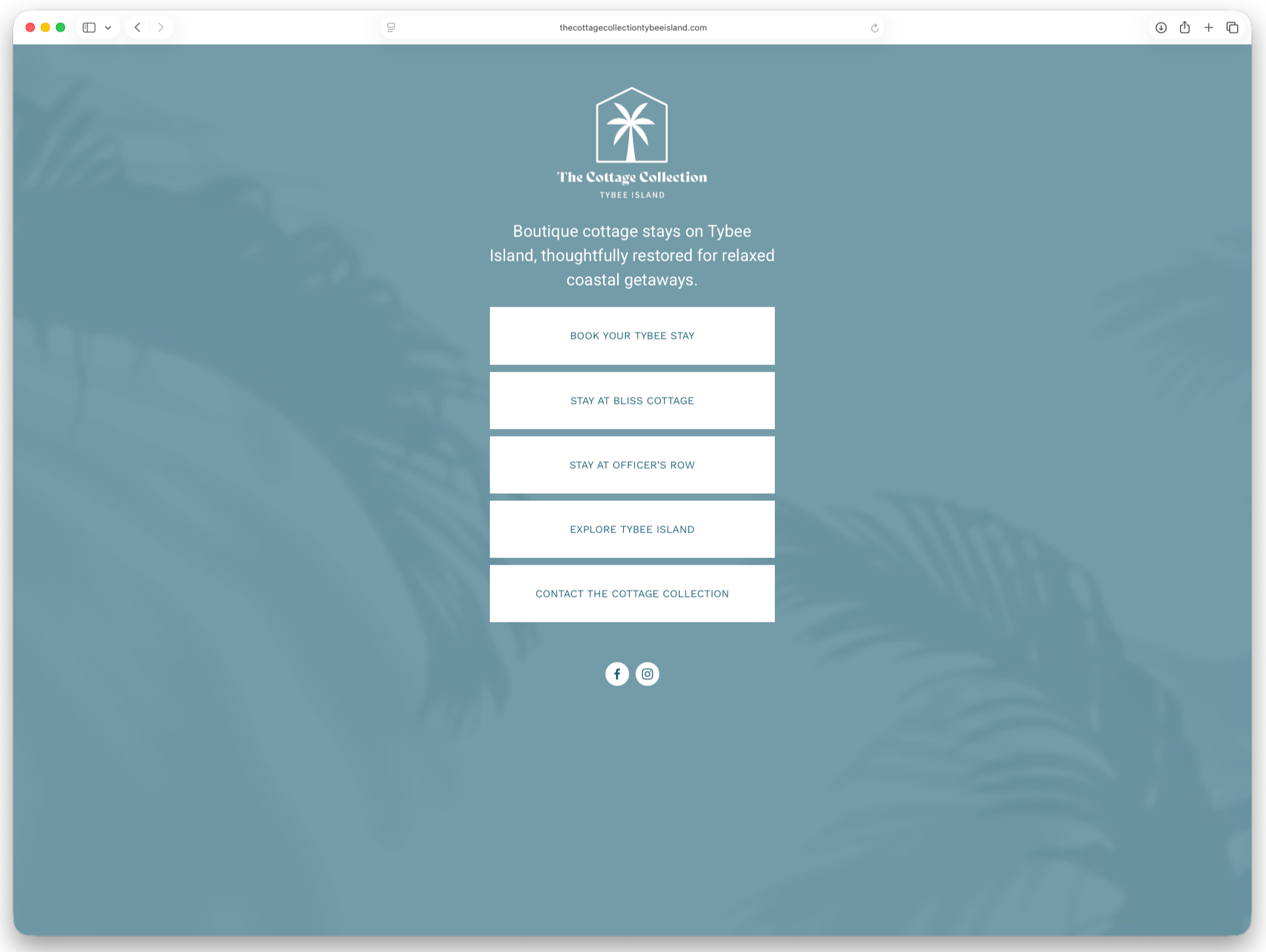
A branded link in bio page created for The Cottage Collection, designed to keep social media visitors within the brand experience and make the next step easy.
Creating a More Intentional Link in Bio Experience for The Cottage Collection
The Cottage Collection already had an audience interested in its properties and the Tybee Island experience; what they needed was a polished destination for those social media visitors once they clicked through.
So instead of relying on a generic third-party link page, we built one directly into the brand's Squarespace website.
The result is a central place where visitors can quickly find the information that matters most, from exploring the cottages and learning more about the property to booking a stay and getting in touch.
However, the page wasn't simply about putting several links in one place.
The real question was: What does someone coming from social media need to do next?
That's the question we recommend asking before building any link in bio page.
Because the goal isn't to give someone 15 different places to click; it's to make the right next step obvious.
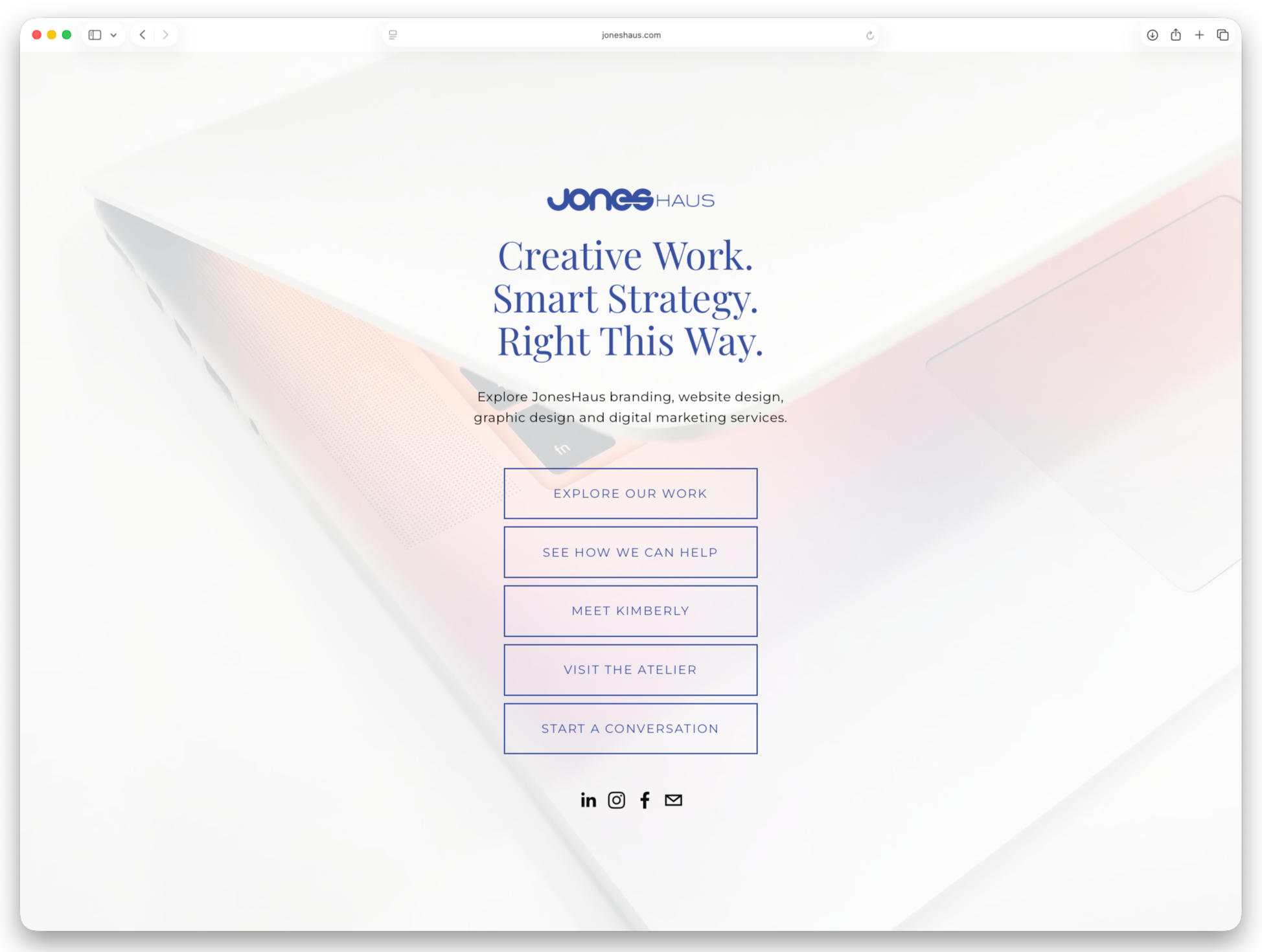
The JonesHaus links page creates a connected, on-brand path for social visitors to explore our work, services and next steps.
The Best Link in Bio Has a Job to Do
A link in bio page can very quickly become a digital junk drawer.
You know the one. Every possible link gets added just in case someone might need it, and suddenly your page has a dozen equally weighted buttons competing for attention.
Just because you can include every link doesn't mean you should.
Instead, start with the purpose.
What do you most want someone to do?
Maybe it's:
Book
Inquire
Shop
Schedule
Read
Explore
Then consider what that person needs to know before they're ready to take that action:
A traveler might want to explore the property before booking.
A potential interior design client may want to understand your services and see your work before filling out an inquiry form.
A customer might need to see your current offerings before deciding what to purchase.
Of course, don't forget about what's relevant right now.
Your link in bio doesn't have to be static. You can use it to highlight:
Seasonal offers
New services
Upcoming events
Limited-time promotions
New products
Recent projects
Important announcements
The best link in bio isn't necessarily the one with the most options.
It's the one that makes the next step clear.
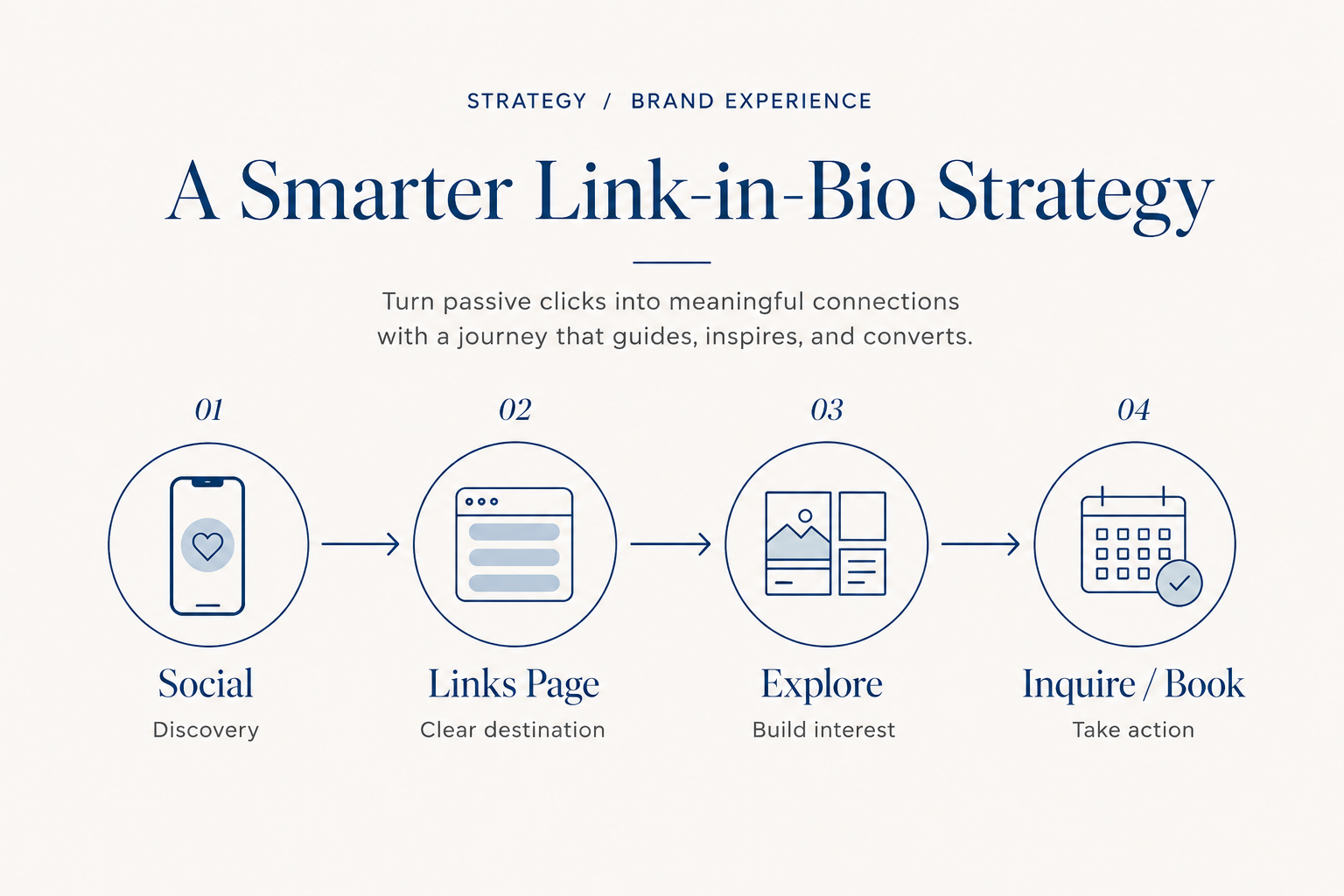
The most effective link in bio doesn’t just collect links. It creates a clear path from discovery to action.
What Should You Include on a Business Link in Bio Page?
There's no one-size-fits-all formula, but a branded link in bio page might include:
A short introduction or welcome
Your primary call-to-action
Services or key offerings
Portfolio or recent work
Booking or scheduling link
Contact information
Current promotion or seasonal offer
Newsletter sign-up
Recent blog post or resource
Social media links
The important part is hierarchy.
Not every link deserves equal attention. Give your most important action the clearest path.
Not every link needs to have the same amount of attention. If booking is your priority, make that easy to find. If you're an interior designer hoping to attract new projects, your portfolio and services probably deserve more prominence than your latest blog post.
Give your most important action the clearest path.
What Could a Link in Bio Look Like for Your Business?
The best link in bio for a business should reflect the way its customers actually make decisions.
For a Hospitality Brand
You might prioritize:
Book Your Stay
Explore Accommodations
Things to Do Nearby
Contact
The journey becomes: social media, explore, build interest, and then book.
For an Interior Designer
You might include:
View the Portfolio
Explore Services
Learn About the Process
Meet the Designer
Inquire
The journey becomes: social media, see the work, understand the services, and then reach out.
For a Builder or Remodeler
You might prioritize:
View Recent Projects
Explore Services
Read Client Stories
Meet the Team
Start a Conversation
The journey becomes: social media, explore the work, build trust, and then inquire.
For a Product-Based Business
Your page might include:
Shop
New Arrivals
Best Sellers
Current Promotion
Join the Email List
The goal isn't to create a universal formula. It's to create a path that makes sense for your audience and your business.
A Branded Links Page Is a Small Website Project with a Bigger Strategy Behind It
On the surface, a link in bio page is a relatively small website project, but the thinking behind it matters.
Creating a good one requires you to consider:
User experience
Content hierarchy
Brand consistency
Calls-to-action
Website navigation
Customer behavior
That's part of what we love about projects like this at JonesHaus. Sometimes, improving your digital presence doesn't mean starting over. Instead, the right update is simply the one that solves a specific problem.
In this case, that problem was simple: How do we create a better destination for people coming from social media?
Your Digital Brand Experience Should Feel Connected
Zoom out for a minute, because this is bigger than your Instagram bio.
Your brand doesn't only exist on your website.
It shows up across:
Instagram
Your link in bio
Your website
Email marketing
Google Business Profile
Inquiry forms
Booking experiences
Follow-up communication
When each touchpoint feels disconnected, the customer experience can feel fragmented.
However, when those pieces feel connected, the brand feels more intentional.
Your link in bio is just one small part of that larger ecosystem, but it's often one of the first places someone goes after discovering your business on social media. That makes it worth thinking about.
Your Link in Bio Is Part of Your Website Experience
We're not here to tell you that you need to abandon your favorite third-party link-in-bio platform. If it works for your business and gives your audience what they need, great, but it is worth taking a closer look at the experience you're creating.
Think through the experience:
Does your link in bio feel like part of your brand?
Does it make the next step clear?
Is it helping people get where they need to go, or are you simply giving them a list of links and hoping they figure it out?
If your website is already the home of your brand, it may make sense for your social media traffic to have a home there, too.
Because your website should be working for your business at every touchpoint, including the link in your bio.
JonesHaus creates thoughtful websites and digital experiences that help businesses show up clearly, consistently, and strategically online.
If your website or your link in bio could be doing more for your brand, let's talk.